
What an Elevated Deck Build Involves
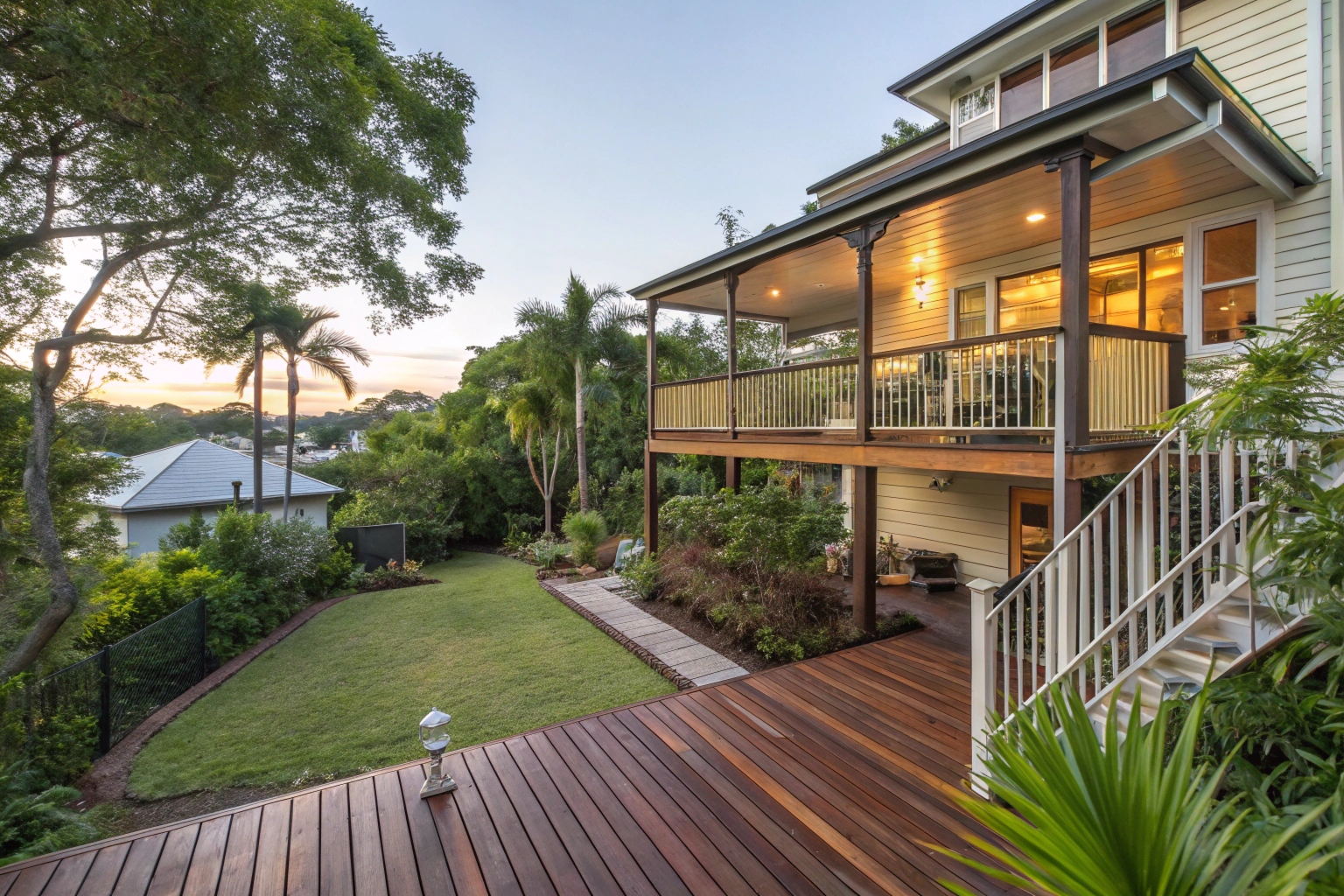
Building an elevated deck is more involved than a ground-level one. The structure sits above the ground, sometimes significantly, which means everything from the footings to the framing needs to be engineered to safely carry the weight at height. We handle the full process from start to finish.
Site Assessment & Design We start with a detailed site assessment – the slope of the land, soil conditions, access, and how the deck will connect to your home all influence the design. From there, we work with you on the layout, the height, the size, and how the deck orientates to make the most of the views and the way you’ll use the space.
Structural Engineering & Certification Elevated decks require structural engineering. We coordinate with engineers to design the footings, posts, beams, and framing to meet Queensland’s building standards. This includes making sure the structure is designed for the specific loads and conditions of your property.
Council Approval Most elevated decks need council approval. We guide you through what’s required for Ipswich City Council, including what needs to be submitted and what certifications are needed before and after construction.
Materials & Construction We source quality timber or composite materials suited to Queensland’s climate and build the deck to the engineered design. Every footing, post, beam, joist, and connection is installed to specification. Railings, balustrades, and finishing elements are all included as part of the full build.

Why Elevated Decks Work So Well in Ipswich
A lot of properties across Ipswich sit on land that slopes or has natural changes in elevation. Rather than trying to flatten everything out or work against the contours, an elevated deck works with what’s already there. It takes advantage of the slope and turns it into something that adds to the property instead of limiting it.
Lifted above the garden, an elevated deck creates a genuine sense of openness. The feeling is different to being at ground level – you’re up in the canopy, looking out over the yard, and the whole experience of being outside shifts. That’s part of what makes elevated decks so appealing. They’re not just functional, they change the way the outdoor space feels.
Elevated decks suit properties where the backyard isn’t perfectly flat, where there’s interesting garden features or views worth looking out over, or where the home sits on a slope that makes a ground-level deck impractical or disconnected from the house. Instead of battling the terrain, the deck becomes part of it.
From a value perspective, an elevated deck is one of the most impressive outdoor additions you can make. It adds visual impact, creates usable outdoor space where there wasn’t any before, and completely changes how the property presents. People notice an elevated deck – it’s a feature that stands out and makes the home feel more finished and considered.
Structural & Engineering Considerations
Structural & Engineering Considerations
Elevated decks require more substantial engineering than ground-level decks. The structure carries weight at height, which means the footings, posts, beams, and framing all need to be designed and built to handle those loads safely. We take this part seriously.
Footings & Posts The footings and posts transfer the weight of the deck down to the ground. We design these based on the specific soil conditions of your site and the height and size of the deck. In Ipswich, soil types vary, and the footing design needs to account for that. The posts are sized and spaced to safely carry the load without deflection or movement.
Framing & Connections At height, every connection matters. The way beams attach to posts, how joists connect to beams, and how the deck ledger attaches to the home all need to be engineered and installed to the correct standard. We use appropriate fixings, brackets, and fasteners throughout, and everything is built to the structural design.
Climate Considerations Queensland’s climate – moisture, humidity, and exposure to weather – influences how the structure is treated and finished. Timber needs proper treatment and coating to resist rot and decay. Metal connections and fasteners are selected to resist corrosion. We build elevated decks to perform in Ipswich’s conditions over the long term.
The complexity is higher than a ground-level deck, but that’s what the engineering and build process are for. We handle it with the care and expertise it requires.
Safety & Compliance
Safety & Compliance
Elevated decks trigger more stringent building requirements than ground-level structures, and that’s how it should be. Anything built at height needs to meet safety standards that protect the people using it.
Railings & Balustrades Queensland’s building codes require railings and balustrades on any elevated deck above a certain height. The standards specify minimum heights, maximum gaps between rails, and load requirements to prevent falls. We build to these standards on every elevated deck as part of the base construction.
Council Approval & Certification Most elevated decks require council approval from Ipswich City Council. Depending on the height and complexity, structural certification from an engineer may also be required. We guide you through what needs to be submitted, when approvals are needed, and what inspections or certifications are required during and after construction. The process varies depending on the specific build, but we handle the coordination as part of the project.
Building Code Compliance The finished deck needs to comply with Queensland’s building codes and Ipswich City Council requirements around structure, safety, and setbacks. We build to these standards throughout the construction, so the deck is compliant from footings through to the finished railings and surface.
Safety and compliance aren’t extras or add-ons – they’re built into how we design and construct elevated decks. You should feel confident that what we’re building is safe, compliant, and done right.
Material Options
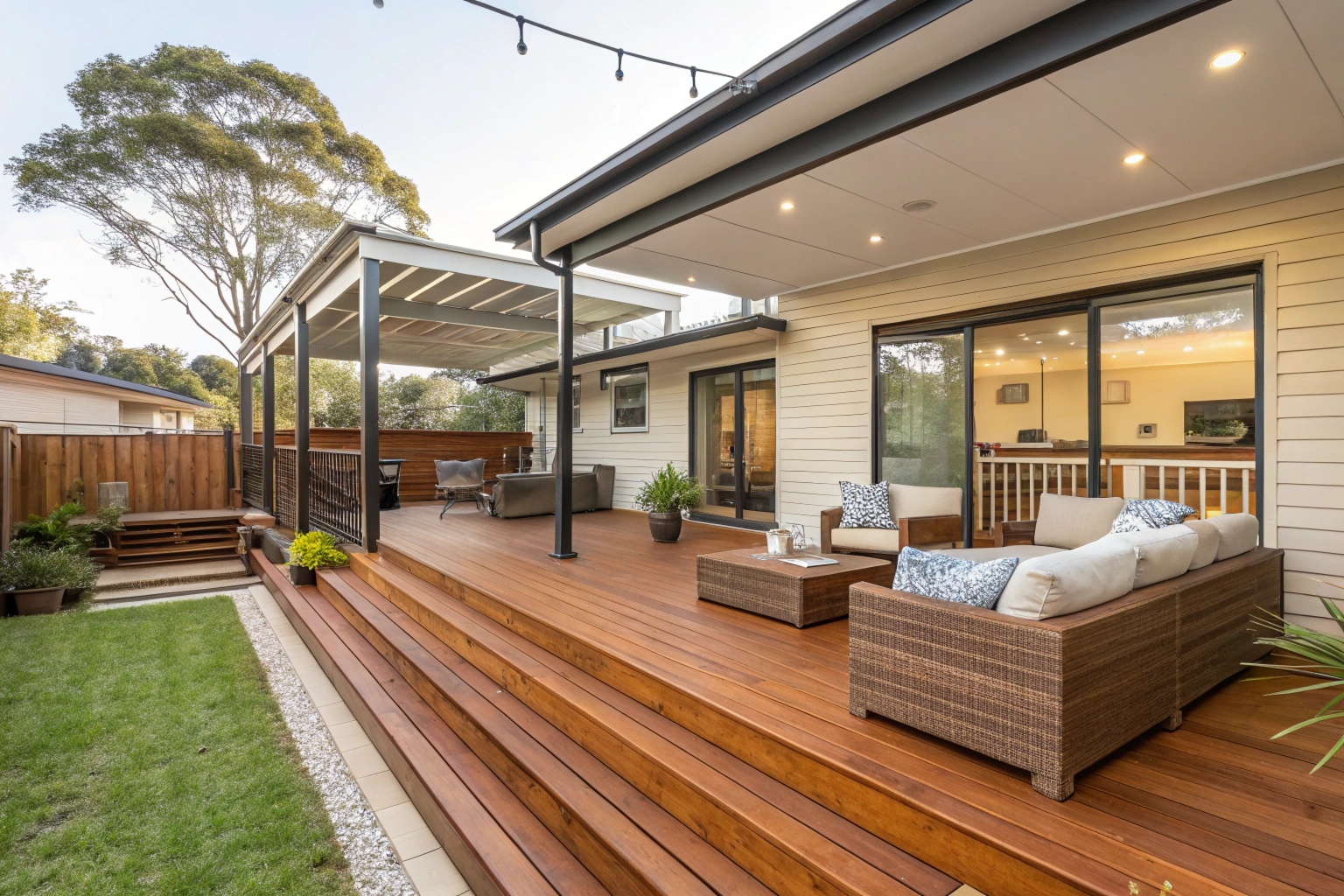
The two main options for elevated decks are timber and composite, and each performs differently in Queensland’s climate at height.
Timber Decking Timber suits a warm, natural aesthetic and works beautifully when the deck is surrounded by garden or greenery. Treated hardwood or treated pine are the common choices in Ipswich. Hardwood is denser and more durable, while treated pine offers good performance at a lower cost. Both need proper treatment and maintenance to resist Queensland’s moisture, sun, and humidity, particularly on an elevated deck where exposure to weather can be more intense than at ground level.
Composite Decking Composite is a timber-alternative material made from wood fibres and plastic. It offers greater durability and lower maintenance – no regular oiling or staining required. Composite resists fading, splintering, and moisture damage better than timber, which makes it well-suited to elevated decks where access for ongoing maintenance can be more difficult. The tradeoff is cost – composite is more expensive upfront – and the aesthetic is different to natural timber.
Material & Weight Considerations The choice of material influences the overall weight of the deck, which affects the structural design. Hardwood is heavier than treated pine, and both are heavier than composite. We account for this in the engineering and design stage so the structure is built to safely carry the specific material being used.
We advise on the best option for your property, budget, and how you plan to use and maintain the deck.
Frequently Asked Questions About Elevated Decks
Most elevated decks require council approval, particularly if they’re above a certain height or within setback distances from boundaries. The approval process involves submitting structural plans and, in many cases, engineering certification. We guide you through what Ipswich City Council requires and handle the coordination around approvals.
The maximum height depends on your property’s zoning, setback distances, and Ipswich City Council requirements. We design the deck to comply with these restrictions while achieving the height that works best for your property and the views you’re after.
Elevated decks require structural engineering, more substantial footings and framing, and railings or balustrades for safety. They typically need council approval and certification. The construction is more complex, but the result is a deck that creates genuine visual impact and takes advantage of elevation and views.
Timeframes vary depending on the size, height, and complexity of the deck, as well as council approval processes. Most elevated decks take several weeks from approval through to completion. We provide a clear timeline as part of the quote.
Timber decks need regular cleaning and re-oiling or staining to protect against Queensland’s climate. Composite decks require less maintenance – regular cleaning is usually sufficient. We advise on the specific maintenance requirements based on the materials used.
Get Started with Your Elevated Deck
An elevated deck from us is a stunning, safe, and expertly built addition to your property that completely transforms how you use and experience your outdoor space. The visual impact, the views, the sense of openness – it all comes together in a structure that’s engineered properly, built to last, and designed around what your property offers.
We service Ipswich and all surrounding suburbs including Goodna, Redbank, Karana Downs, Collingwood, and across the region. Whether your property has a slope that’s been sitting unused, or you’re looking to create an outdoor space that takes advantage of the elevation and the views, we can design and build an elevated deck that suits the land and what you’re after.
We offer a free design consultation and quote – completely obligation-free. We’ll visit your property, assess the site, talk through what you’re looking to achieve, and provide a detailed quote that covers the full build including engineering, materials, construction, and all compliance requirements. No pressure, no hard sell, just honest advice and a clear price for what’s involved.
Ready to get started? Give us a call or get in touch through the contact form. We’ll arrange a time to visit your property and talk through what’s possible with an elevated deck on your land.
